
Metering Pump Flow Rate: Rated Capacity vs VFD Speed Control
A buyer asked us last month whether the rated metering pump flow rate on a nameplate is something the variable frequency drive "creates". It is not. The rated metering pump flow rate is what the pump delivers at 100% stroke length, rated stroke rate and rated discharge pressure. Motor speed, gearbox ratio and the displacement of the liquid end fix that figure at the factory. A VFD only gives you one more way to turn the output down, much like the stroke knob does. This article is for engineers sizing motor-driven mechanical and hydraulic diaphragm pumps, and for the operators who have to set them up.
Where the rated metering pump flow rate comes from
Two terms first. Stroke length is how far the diaphragm travels on each stroke, which sets the volume per stroke. Stroke rate is how many strokes the pump makes per minute. Multiply the two, apply the volumetric efficiency of the liquid end, and you have the theoretical metering pump flow rate.
On a motor-driven diaphragm pump, the motor runs at its rated speed on mains frequency. A worm gear or gear train reduces that speed to drive the eccentric or crankshaft, and the result is the rated stroke rate. Set the stroke to 100%, keep discharge pressure within the rating, and the pump delivers its nameplate metering pump flow rate. A pump without any drive at all reaches the same figure. The VFD plays no part in the rating.
Real-world output can drift from the nameplate. Lower back pressure may give slightly more; viscous chemicals or poor suction conditions give less. That is why a calibration column belongs on every installation.
How metering pump flow rate changes with motor frequency
With stroke length fixed and pressure stable, metering pump flow rate is roughly proportional to motor frequency. Drop from 50 Hz to 25 Hz and the stroke rate halves, so metering pump flow rate falls to about half. "About" matters here. At low speed, check valve closing lag and diaphragm recovery take up a larger share of each stroke, so linearity gets worse. Always verify the new setting with a drawdown test rather than trusting the ratio.
Can you push the drive above 50 or 60 Hz to get more than the rated metering pump flow rate? We advise against it. Overspeed loads the motor, gearbox and connecting rod beyond their design speed, raises the risk of cavitation on the suction side, and can leave check valves too little time to seat. If the pump is too small, fit a larger liquid end or a larger pump.
Why solenoid pumps are different
A solenoid diaphragm pump drives the diaphragm with an electromagnet, and its electronics set the stroke frequency with pulses. Its rated output already assumes maximum pulse rate and full stroke. There is nothing for an external VFD to do, and feeding one into the pump can damage the control board.
VFD control vs stroke length adjustment
Both methods turn the output down. They suit different jobs:
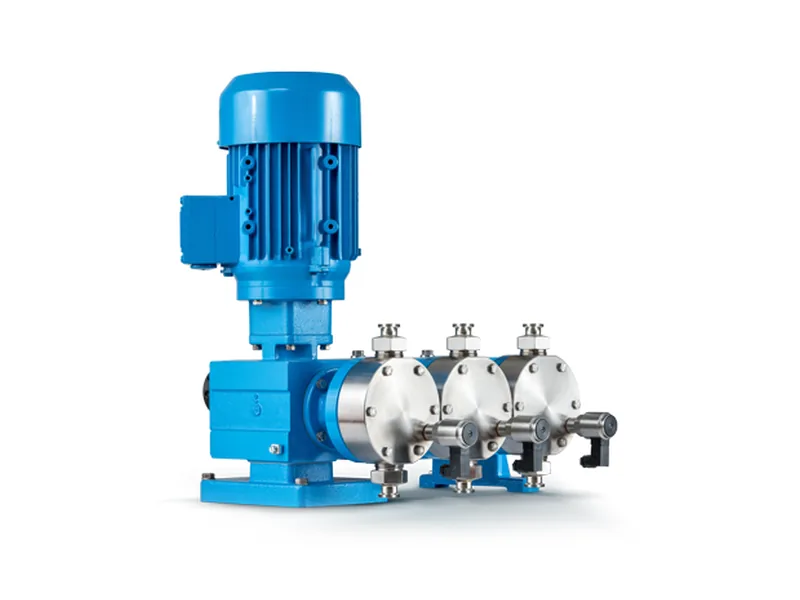
Figure 1: LEWA ecodos multiplex mechanical diaphragm metering pump. Image source: LEWA official website
- Stroke length only: a manual knob or an electric stroke actuator. Good for steady duties that change now and then. No drive panel needed.
- VFD only: stroke fixed near the top, motor speed driven by a 4-20 mA signal. Good for flow-paced dosing that changes all day.
- Both together: stroke sets a coarse range, the VFD tracks the process. This gives the widest turndown.
LEWA describes its ecodos mechanical diaphragm metering pump this way on its website: 16 to 1460 l/h per pump head, maximum discharge pressure of 20 bar, flow adjustment accuracy of ±1%, and a setting range of up to 1:50 using stroke length and/or rotational speed. Output can be controlled on the motor side with a frequency converter or with automatic stroke adjustment. In other words, the manufacturer treats stroke and speed as parallel adjustment tools, while capacity is still set by pump size.
Running very short strokes hurts repeatability, as we explain in why stroke length should stay above about 30%. For setting both adjustments together, see stroke length and frequency for flow adjustment.
Low-speed operation: what to watch
Motor cooling is the usual trap. A standard induction motor cools itself with a shaft-mounted fan. Slow the shaft and airflow drops with it. Run a long time at very low frequency and the motor housing gets hot. For sustained low-speed duty, specify an inverter-duty motor or a separately powered fan, and set the minimum frequency according to the motor and pump manuals.
Dosing quality is the next issue. At very low speed the gap between strokes grows and chemical arrives in distinct slugs. For processes that need smooth, continuous dosing, shorten the stroke and keep the speed higher instead.
One more point that often gets missed: the drive's minimum frequency and stop logic. Some sites map 4 mA to 0 Hz. When the signal wire breaks, the pump stops and nobody notices. Set a sensible minimum speed and bring drive fault and run feedback into the control system.
Sizing around the rated metering pump flow rate
Place your maximum dose at roughly 70% to 90% of the rated metering pump flow rate, with normal flow near the middle of the range. That leaves room to adjust both up and down. Do not count on a VFD to stretch a small pump, and do not buy a much larger pump and run it at crawling speed. Compare liquid end displacement and stroke rate across series in our guide to diaphragm metering pump specifications, browse mechanical diaphragm metering pumps, or see the LEWA brand page.
Conclusion
The rated metering pump flow rate does not come from a VFD. It is the output at full stroke, rated stroke rate and rated pressure, fixed by the motor, gear ratio and liquid end. Frequency control and stroke adjustment both reduce metering pump flow rate and can be used alone or together. Watch motor cooling and dosing smoothness at low speed, and avoid overspeed. Send us your dose rate, line pressure, chemical and control signal, and contact our engineers to confirm the pump size and control method.
FAQ
Can a diaphragm metering pump reach rated flow without a VFD?
Yes. At 100% stroke, rated pressure and good suction, a pump on mains power delivers its rated metering pump flow rate.
Does 25 Hz give exactly half the flow?
Roughly, not exactly. Volumetric efficiency shifts at low speed, so run a calibration test after changing the setting.
Can the pump run below 10 Hz for long periods?
It depends on the motor and the manufacturer. Standard motors cool poorly at low speed, so use an inverter-duty motor or an auxiliary fan and follow the minimum frequency in the manual.
Is a VFD better than an electric stroke actuator?
Each has its place. A VFD suits frequent automatic changes and flow pacing. An electric stroke actuator is enough for stable duties that need remote setpoint changes.
Can I run at 60 Hz on a 50 Hz pump to get more flow?
Only if the manufacturer approves it. Otherwise you overload the motor and gearbox and risk cavitation. Choose a larger liquid end instead.