
Chemical Dosing Room Eyewash Station: Where and Which Type
Yes, a chemical dosing room eyewash station belongs in any room that stores or pumps hypochlorite, acids, caustic or other chemicals that can injure eyes. The point is not to tick a box. It is to give an operator clean, flowing water within a few seconds of a splash, at the spot where splashes actually happen, in every season.
This article is for operations managers at water and wastewater plants, industrial water treatment teams, and engineers laying out new dosing rooms. It covers general good practice. Local codes, your insurer and your own safety rules set the final requirements.
Why a chemical dosing room eyewash station matters
A splash on the arm gives you time to pull off a sleeve and find a hose. A splash in the eye does not. Caustic is the worst case because it keeps penetrating tissue, so the damage grows with every second of delay. Common guidance is to start flushing immediately and keep going for at least 15 minutes, which is far longer than most people expect and impossible with a bottle of saline.
The everyday tasks that cause most splashes:
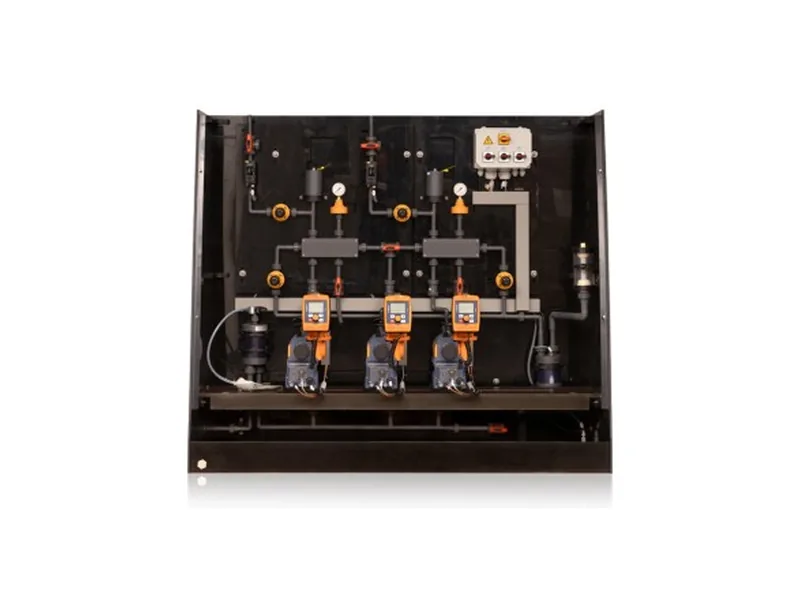
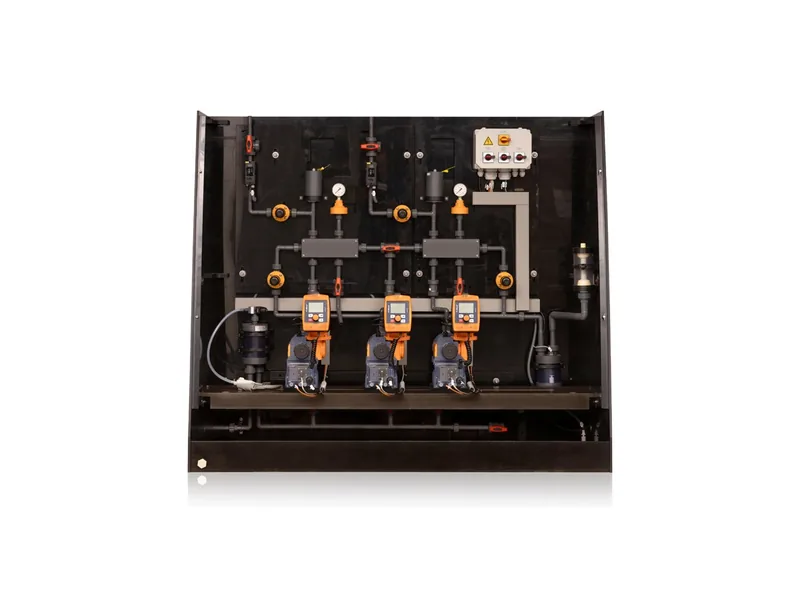
Figure 1: ProMinent DULCODOS Panel with metering pumps and valves. Image source: ProMinent official website
- Disconnecting a delivery hose at the truck fill point before the coupling is fully drained.
- Opening a pump head or check valve while the discharge line still holds pressure.
- Pouring concentrate or powder into a make-up tank.
- Flushing a line with the wrong valve open, so chemical sprays from a drain point.
None of this is exotic. That is why a chemical dosing room eyewash station is basic equipment rather than an upgrade.
Where to install a chemical dosing room eyewash station
Location matters more than the number of units. A few working rules:
- Put a unit close to each hazard zone: the fill point, the tank area and the pump area.
- Keep the route clear. No doors, steps or equipment to walk around. Many guidelines work on a travel time of roughly 10 seconds.
- Leave room to stand, bend and hold the eyes open in the stream.
- Mark it clearly and light it well. A person who cannot open their eyes has to find it from memory.
Here is a typical layout problem. Many plants now use panel-mounted metering systems such as the ProMinent DULCODOS Panel, where pumps, valves and piping sit on a single backboard. Do not mount the chemical dosing room eyewash station directly under that board, where an operator would have to back away from the pumps before reaching it. One or two steps to the side and slightly forward works better. You can see more ProMinent systems on our ProMinent brand page.
Chemical dosing room eyewash station: eyewash only or combination unit?
- Combination eyewash and emergency shower: the right choice where bulk deliveries are unloaded or large tanks are filled, because a body splash needs a full drench.
- Pedestal or wall-mounted eyewash: fine for small rooms with day tanks and routine inspection only.
- Self-contained portable units: useful at temporary points without a water supply, but treat them as a supplement.
Material is worth a thought. Air in hypochlorite and hydrochloric acid rooms is corrosive, and plain stainless fittings can spot and pit over a few years. A coated or more corrosion-resistant unit lasts longer.
Water supply, drainage and the emergency shower
Plan the chemical dosing room eyewash station and the emergency shower together. Both need a reliable supply with enough flow. Do not tee them off the same small pipe that feeds the make-up water, or both outlets will weaken when used at the same time. Tempered water is the goal: cold enough to be safe, warm enough that someone can bear standing under it for the full flush.
Drainage is the part most layouts forget. Flush water carries chemical, so it should not run into a storm drain. Route the floor drain under the eyewash and shower to the room's spill sump or the plant sewer, and slope the floor toward it, away from tanks and electrical panels.
Chemical segregation and dosing room safety
If hypochlorite and acid share a room, mixing them releases chlorine gas. Keep them in separate bunds, and place each chemical dosing room eyewash station so that a person flushing does not stand in the spill path of the other chemical. Our article on hypochlorite storage safety covers ventilation and containment in more detail, and chemical dosing room design for wastewater plants looks at the overall layout.
Other items that support the eyewash:
- Goggles or face shields at the door, worn before entering.
- Safety data sheets posted where operators can read first-aid steps.
- Splash covers on pump heads; see dosing pump splash guards and enclosures.
- Two people present during bulk unloading.
Freeze protection and weekly testing
Unheated rooms and outdoor skids in cold climates freeze eyewash lines every winter unless someone plans for it. Use freeze-protected units, or heat trace and insulate the supply. In summer, check that sun-heated pipes do not deliver scalding water.
The single most useful habit is a weekly activation test. Run the chemical dosing room eyewash station for a short time to clear stagnant water, check that the dust caps pop off and that the stream is even. Units that sit untouched for years usually spit rusty water the first time they matter.
Conclusion
Every room that handles corrosive chemicals needs a chemical dosing room eyewash station, installed close to the fill point, tanks and pumps, reachable in seconds over a clear route, fed with tempered water and protected from freezing. Pair it with an emergency shower where bulk chemicals are handled, drain the flush water to a sump, and segregate incompatible chemicals. If you are planning a chemical dosing skid and want the pumps and safety equipment laid out together, send us the chemical list and room drawing and contact our engineers.
FAQ
Do I need an eyewash if the room only holds PAC and polymer?
It is still a good idea. PAC solution is acidic and powder dust irritates eyes, so splashes during make-up still need flushing.
Can a chemical dosing room eyewash station run off the potable water line?
Yes, provided pressure and flow are adequate and the water is clean. A dedicated branch works better than sharing with make-up water.
How often should a chemical dosing room eyewash station be tested?
Typically weekly. Run it to flush the line, check the flow pattern and caps, and in winter confirm the freeze protection.
Does an eyewash replace safety goggles?
No. Goggles prevent the injury and the eyewash limits the damage after it happens. Operators need both.
What about an outdoor dosing skid with no building?
Install a freeze-protected pedestal unit next to the skid, and keep a portable unit as backup where no supply is available.