
Dosing Pump Mounting: Platform Height, Vibration and Pipe Support
Good dosing pump mounting comes down to three things: the pump sits level and solid, the piping puts no load on the pump head, and a technician can reach every valve for service. Platform height follows the lowest tank level and the clearance needed below the suction valve. Frame material follows the chemical and the environment. The pump is bolted down level, and suction and discharge lines get their own supports. Get these right and most vibration, leak and maintenance complaints never show up.
This article covers only the platform and support step, for installers and plant engineers. For foundations, overall pipe routing and wiring, see our mechanical diaphragm pump installation plan. For accessories and line design, read metering pump installation and piping design.
Setting platform height for dosing pump mounting
Higher is not better. On the suction side you usually want the pump below the lowest liquid level in the tank, so chemical floods the head. That puts a ceiling on platform height. The platform cannot sit on the floor either. A mechanical diaphragm pump has its suction valve under the head, and you need room below it for the pipe, a strainer and valve removal. The NEWDOSE mechanical pump manual asks for a work stand raised off the floor, with suction and discharge connections vertical, not tilted.
In practice, lay out tank bottom elevation, pump inlet centerline and strainer size on the drawing first, then work back to platform height. That beats shimming on site, and it keeps dosing pump mounting consistent across a row of pumps.
Frame material for dosing pump mounting
Three common builds
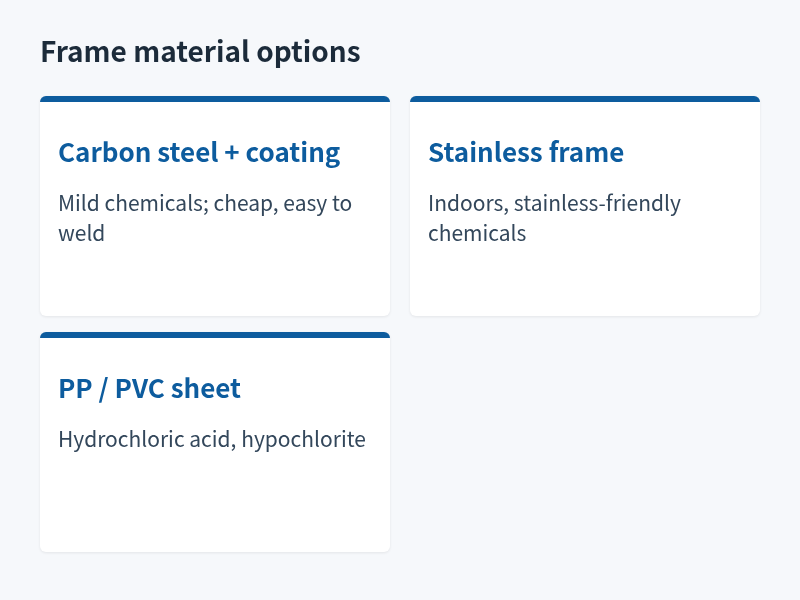
Figure 1: For acids and hypochlorite that attack metal, a welded PP or PVC platform is the usual choice.
- Welded carbon steel with a protective coating. Cheap and easy to fabricate, but it rusts quickly once the coating breaks in acid fume areas.
- Stainless steel frame. Suits indoor rooms where the chemical is compatible with stainless.
- Welded PP or PVC platform. Suits hydrochloric acid and sodium hypochlorite, which attack metal. Plastic is weaker, so add ribs on long spans.
Structural rules
The stand must be rigid and resist vibration, with service space all round. Do not level a pump base on wood blocks or bricks; they absorb moisture, deform, and the pump ends up tilted. With several pumps side by side, leave room to swing a wrench between them and face the stroke adjustment knob toward the walkway.
Leveling and anchoring the dosing pump mounting
Once the platform is in place, level it before anchoring it with bolts or welding to embedded plates. Then bolt the pump base down level so it cannot tip or fall, which the manual states plainly. Check level in both directions on the pump base. If it is off, shim between platform and foundation with steel shims, not under the pump feet.
Ground a steel platform properly, especially when the pump and control box share it. Use a dedicated grounding point rather than a pump foot bolt; it is easier to inspect.
Controlling vibration after dosing pump mounting
Mechanical diaphragm and plunger pumps are reciprocating, so discharge pressure pulses with every stroke and a shaking frame is common. Reduce the source first, then break the path:
- Fit a pulsation dampener on the discharge line. Location and precharge are covered in dosing pump pulsation dampener installation.
- Make the platform stiff. Pumps on cantilevered brackets are the most likely to resonate.
- A short hose or flexible connector between pipe and pump head helps, but its pressure rating and chemical compatibility must match the duty. Follow the product data if unsure.
Solenoid pumps vibrate far less and usually go on a wall bracket or small shelf. For this kind of dosing pump mounting, the point is a plumb, rigid bracket; do not anchor into hollow block.
Pipe support in dosing pump mounting
The pump head should carry no extra load from piping, or it will see stress and vibration. Pipes must be supported and fixed independently. Plastic heads are the most sensitive part of any dosing pump mounting; pulled by a pipe for months, threaded ports and even the head body can crack.
Place supports close to the downstream side of the suction and discharge valves, and give heavy items such as valves, strainers and dampeners their own brackets. PVC and PP pipe expand and contract noticeably, so use guide clamps on long straight runs rather than locking every support.
Leak containment and protection
Place a drip tray or container under the pump head to catch chemical or oil if a diaphragm or seal fails. That matters most with hazardous chemicals. A platform carrying several acid and caustic pumps is best built as one bunded tray. Outdoors, add a canopy and keep the pump out of direct sun.
Before removing a pump from the platform, isolate power, close suction and discharge valves, release pressure and drain the head, then work with gloves and goggles.
Conclusion
Solid dosing pump mounting follows a simple order. Set height from tank level and suction clearance, choose material for the chemical, level the frame and bolt the pump down. Control vibration with a dampener and a stiff frame, support pipes on their own so the head carries nothing, and finish with a drip tray, canopy and grounding. Valves and dampeners are in our dosing accessories range, and pumps are under mechanical diaphragm metering pumps. Send tank sizes, pump model and site photos and contact our engineers for a check on platform height and support points.
FAQ
How thick should a steel frame for dosing pump mounting be?
It depends on pump weight and span; there is no single figure. The frame should not move when someone stands on it or the pump runs.
Can a pump sit directly on the tank lid?
Small solenoid pumps and some small mechanical pumps can. Larger pumps should not; the lid usually cannot take the weight or vibration.
Is a rubber pad under the pump acceptable?
Yes, as long as the pump stays level once the bolts are tight. Replace pads when they harden or deform.
How close to the pump should the first pipe support be?
Usually just downstream of each valve, so the head carries no weight. Exact spacing depends on pipe size and material.
When can the pump run after dosing pump mounting is finished?
If the base was grouted, wait for the grout to cure. A welded steel frame can be tested once bolts and grounding are checked.