
Dosing Pump Bar Rating: What It Means and How to Read It
Look at almost any metering pump nameplate and you will see a figure such as 7 bar, 10 bar or 16 bar. The dosing pump bar rating is the maximum discharge back pressure the pump is designed to work against, in other words the highest pressure that can exist at the injection point while the pump still delivers its rated flow.
Misreading that number is one of the most common selection mistakes. Pick too low and the pump cannot inject. Pick far too high and you often pay more for less flow. Here is how to read it properly.
Dosing pump bar rating and unit conversions
Bar is the standard pressure unit for European pump makers. Some sites work in psi, others in MPa or kgf/cm². These conversions cover most situations:
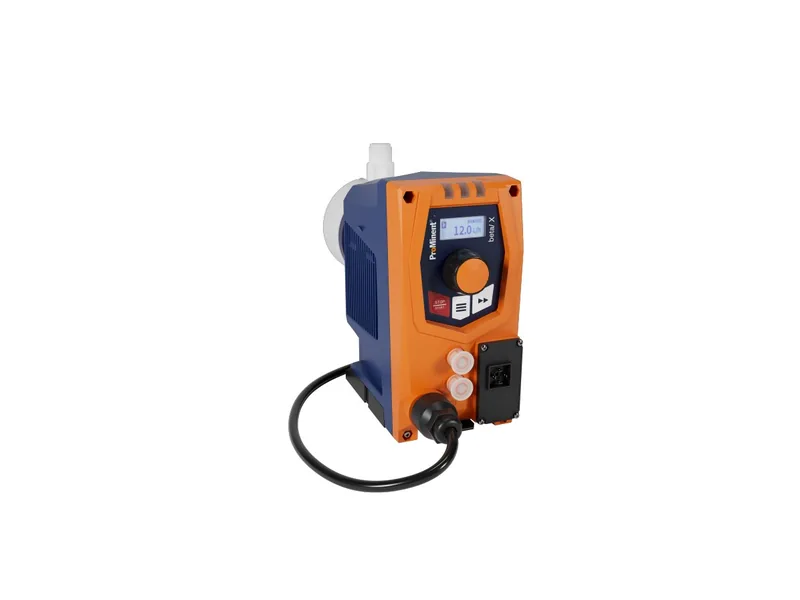
Figure 1: ProMinent beta/X solenoid metering pump. Image source: ProMinent official website
- 1 bar = 14.5 psi, so a 10 bar pump is roughly 145 psi.
- 1 bar = 0.1 MPa, so 10 bar equals 1 MPa.
- 1 bar ≈ 1.02 kgf/cm², close enough to treat as equal.
- 1 bar ≈ 10 m of water column, useful for quick head estimates.
Gauge versus absolute pressure
A pressure gauge reads gauge pressure, with atmosphere as zero. Suction conditions are sometimes quoted in absolute terms, written bar a or bar abs. A hydraulic diaphragm pump rated for suction down to 0.1 bar absolute can draw from near vacuum; that has nothing to do with its discharge bar rating.
Reading the dosing pump bar rating against flow
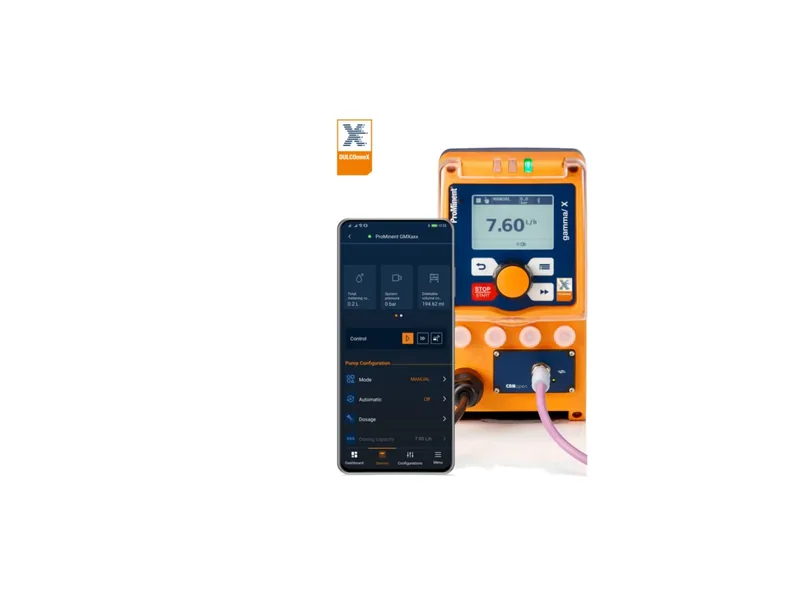
Nameplates normally pair flow with pressure, for example 7.6 l/h at 7 bar. That means the pump delivers about 7.6 l/h against 7 bar of back pressure. At lower back pressure the output is usually slightly higher; at the full dosing pump bar rating it is at its stated minimum.
Take the ProMinent gamma/X solenoid metering pump as an example. Within one range, higher-pressure sizes deliver less flow and higher-flow sizes are rated for lower pressure. ProMinent lists beta/X at 10 ml/h to 50 l/h across 16 to 2 bar, following the same pattern. To decode the numbers inside a model code, see our ProMinent model code guide.
Heads and diaphragms can lower the limit
Changing the liquid end can change the dosing pump bar rating. ProMinent notes that some special diaphragm materials are limited to 10 bar maximum operating pressure and can deliver 10 to 20 percent differently from the standard diaphragm. Always check the head option, not just the drive nameplate.
Typical pressure ranges by pump type
Solenoid metering pumps cover most low-pressure duties, typically 2 to 16 bar, in water treatment, pools and cooling towers. Motor-driven mechanical diaphragm pumps sit in a similar range but handle far more flow, from tens to over a thousand litres per hour.
Hydraulic diaphragm and plunger pumps take over for high pressure: boiler feed, oilfield injection and reactor feeds run from tens to hundreds of bar. As the dosing pump bar rating rises, the pressure class of tubing, valves and relief valves must rise with it.
How much pressure does your system need?
The required pressure is more than the line pressure at the injection point. Estimate it this way:
- Line pressure at the injection point: the normal operating pressure of the pipe you dose into.
- Friction losses: long, narrow or heavily bent lines add loss, especially with viscous chemicals.
- Elevation: every 10 m the injection point sits above the pump adds about 1 bar.
- Back pressure valve setting: with open discharge or very low line pressure, a back pressure valve is needed and its setting counts.
Add these together and allow 1 to 2 bar margin; that is the dosing pump bar rating to look for. For adjustment details, read our metering pump pressure adjustment guide.
Bar is not the flow setting
A dosing pump bar rating tells you pressure capability, not how much chemical you are adding. Dose is adjusted in other units, whatever the dosing pump bar rating:
- l/h: direct flow, which newer pumps let you set on the display.
- ml per stroke: volume per stroke, tied to stroke length.
- Stroke length %: the 0 to 100 percent knob.
- Stroke frequency: strokes per minute; some pumps show this as f, explained in our f display guide.
Actual flow is roughly volume per stroke multiplied by stroke frequency. For best accuracy, keep stroke length above about 30 percent and adjust frequency.
Common mistakes
Treating bar as size. A 16 bar pump is not bigger than a 7 bar pump; it handles higher pressure and may deliver less flow.
Selecting from pipe design pressure. Design pressure is often well above operating pressure. Selecting the dosing pump bar rating from design figures leads to oversized pumps.
No relief valve. If the line blocks, pressure climbs past the pump limit. Fit a relief valve set slightly above operating pressure and below the pump rating.
Conclusion
A dosing pump bar rating is the maximum back pressure the pump can work against at its stated flow. Remember 1 bar is about 14.5 psi or 0.1 MPa, always read pressure and flow together, and size from real operating pressure plus losses, elevation and back pressure valve setting. Dose itself is set in l/h, stroke length and frequency.
If you are unsure what a nameplate means for your application, contact us and we will check it with you.
FAQ
What does 10 bar mean on a dosing pump?
It means the pump can inject against up to about 10 bar, roughly 145 psi or 1 MPa, at its rated flow.
Is a higher dosing pump bar rating always better?
No. Choose enough pressure plus a sensible margin. Excess pressure capability usually comes with lower flow and higher cost.
At what pressure is nameplate flow measured?
Usually at the maximum rated back pressure. Output tends to rise slightly at lower pressure.
How do I convert bar to psi?
Multiply by 14.5. So 7 bar is about 102 psi and 16 bar is about 232 psi.
Does a pump with open discharge need back pressure?
Yes. Too little back pressure causes over-delivery and unstable dosing, so a back pressure valve of around 1.5 bar is usually fitted.