
Ammonia Dosing for Boiler Feedwater: Power Plant Condensate Control
Ammonia dosing for boiler feedwater raises condensate and feedwater pH into the mildly alkaline range, which slows flow-accelerated corrosion across the steam-water cycle. Under reducing all-volatile treatment, plants also add hydrazine or an alternative oxygen scavenger to remove the oxygen that the deaerator leaves behind. The dose usually follows condensate flow, with specific conductivity or pH trimming it. This article is for power plant chemists, I&C engineers and maintenance staff. It focuses on how the ammonia and scavenger are injected and controlled, not on a full map of boiler injection points.
Why condensate needs ammonia
Condensate is extremely pure water with almost no buffering capacity. A little dissolved carbon dioxide pulls pH down, and carbon steel piping, economizers and feedwater heater tubes start to suffer flow-accelerated corrosion where velocity is high. The iron released ends up as deposits in the boiler.
Ammonia is a volatile alkali, so it travels with both steam and water and protects both phases. That is the main reason ammonia dosing for boiler feedwater is preferred over solid alkalis in high-pressure cycles. Raising pH stabilizes the oxide layer on steel. More is not better, though. Units with copper alloy components see faster copper corrosion when ammonia is too high, so the control band for ammonia dosing for boiler feedwater depends on cycle metallurgy and the applicable water chemistry guidelines.
AVT(R) or AVT(O)?
All-volatile treatment uses only volatile chemicals, no solids, in the feedwater. There are two variants:
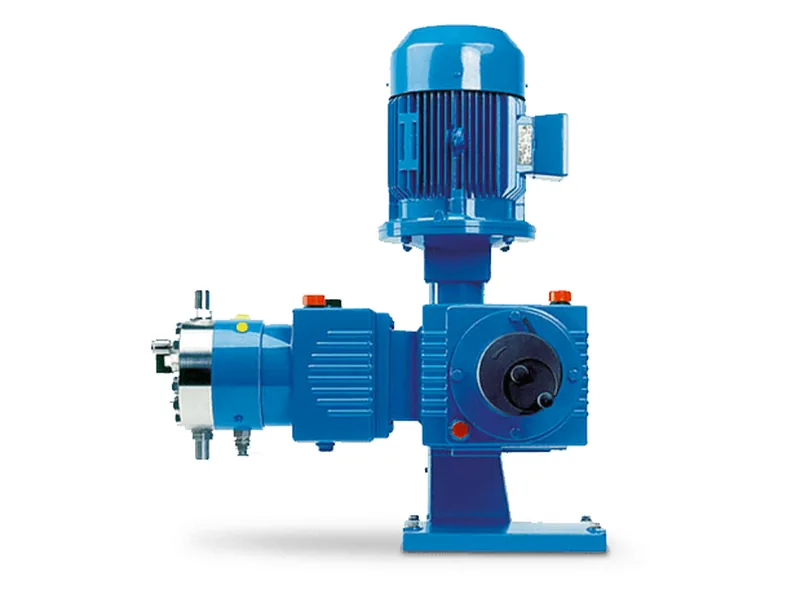
Figure 1: LEWA ecoflow diaphragm metering pump, side view. Image source: LEWA official website
- AVT(R), reducing: ammonia plus hydrazine keeps the cycle reducing. It is typically used where copper alloys are present, since hydrazine limits copper corrosion.
- AVT(O), oxidizing: ammonia only, with no scavenger. A trace of oxygen helps form a denser protective oxide on steel. It suits all-ferrous cycles and often gives lower feedwater iron.
Some units with good condensate polishing move to oxygenated treatment, which is a separate regime. Either way, ammonia dosing for boiler feedwater stays in place; what changes is whether a scavenger runs alongside it. Switching regimes is not a valve change. The chemistry team should decide based on metallurgy, polishing performance and monitoring data.
Where to inject ammonia dosing for boiler feedwater
The ammonia point is normally downstream of the condensate polishers, on the condensate pump discharge side. Some units add a trim point at the deaerator outlet or feed pump suction. Mixed-bed polishers remove ammonia, so ammonia dosing for boiler feedwater must come after polishing. Dose ahead of the polishers and the resin simply strips it out while its run length shortens.
Hydrazine usually goes in at the polisher outlet too, a short distance from the ammonia dosing for boiler feedwater quill, so it starts reacting with oxygen through the low-pressure heaters. Ammonia and hydrazine can be prepared and pumped separately, or blended in one tank and fed by one pump. Blending saves equipment but locks the ratio; any change means mixing a new batch.
Controlling ammonia dosing for boiler feedwater
A proven control scheme looks like this:
- Condensate flow as feedforward, so pump output scales with flow.
- Specific conductivity or pH as feedback to trim the dose.
- High and low alarms that drop the loop to manual and alert the duty chemist.
In pure water, specific conductivity tracks ammonia concentration closely and responds quickly, so it makes a better primary signal than pH, with pH as a cross-check. Our article on automatic boiler dosing with conductivity and pH explains the loop.
Oxygen scavenger dosing and hydrazine alternatives
Hydrazine is an effective scavenger and reducing agent but highly toxic. Ventilate the mixing area, wear gloves and face shields, keep drums locked, and provide wash-down and spill collection.
Because of that toxicity, many plants have moved to alternatives such as carbohydrazide. Dose rates, breakdown products and effects on steam purity differ from hydrazine, so trial any change while watching feedwater dissolved oxygen and cation conductivity. For the full set of feedwater chemicals, see boiler feedwater chemical treatment.
Sizing the ammonia dosing pump
Ammonia dosing for boiler feedwater is low flow, relatively high pressure and continuous. On the condensate pump discharge the line pressure is significant, so rated pump pressure must sit well above the maximum operating pressure at the injection point, plus losses through the back pressure and check valves.
What has worked well in the field:
- Hydraulic or mechanical diaphragm metering pumps, motor driven, in a duty/standby pair.
- VFD speed control or a 4–20 mA input for feedforward plus feedback control.
- A sealed tank for aqueous ammonia with the vent routed to a water seal or scrubber; stainless steel pump heads with seals checked against ammonia.
- A pulsation dampener and relief valve on the discharge, because pulsation on long small-bore lines upsets flow readings.
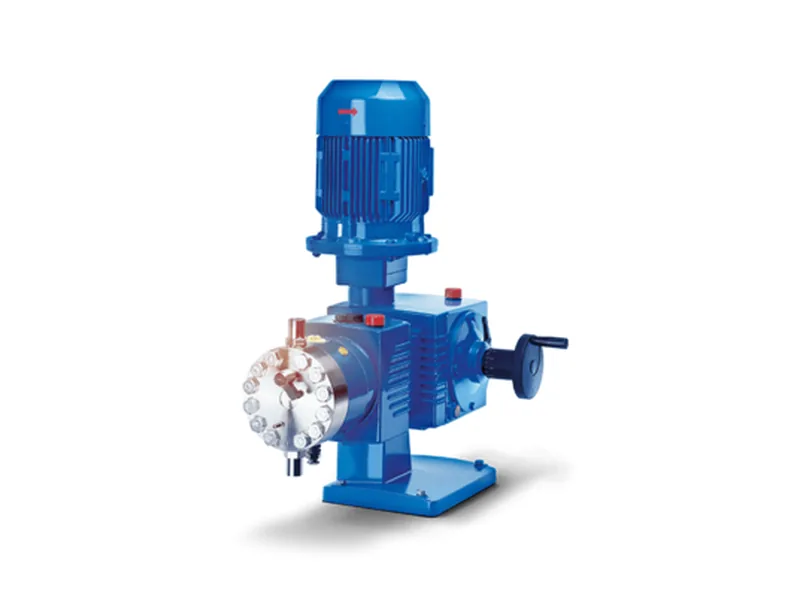
LEWA ecoflow diaphragm metering pumps are one option for continuous duty like this. For matching pump type to pressure, see boiler dosing pump selection, or browse our diaphragm metering pump range and the LEWA brand page.
Conclusion
Good ammonia dosing for boiler feedwater comes down to a few rules. Inject after condensate polishing, pace on condensate flow and trim on specific conductivity. Let metallurgy and monitoring data decide between AVT(R) and AVT(O). Trial any hydrazine replacement before committing. Choose continuous-duty diaphragm metering pumps with pressure margin and a standby unit. Send us unit data, injection point pressure and available control signals, and contact our engineers to review the pump and control scheme.
FAQ
Why can't ammonia be dosed before the condensate polishers?
The mixed beds exchange it out, so the chemical is wasted and resin run length drops.
Should ammonia dosing for boiler feedwater be controlled by pH or conductivity?
Specific conductivity is usually the primary signal because it responds fast and tracks ammonia well. Use pH as a check, and recalibrate if the two disagree.
Can ammonia and hydrazine share one tank and pump?
Yes, some plants do it, but the ratio is fixed. Units with frequent load swings are better served by separate pumps.
Do I need new pumps when switching to carbohydrazide?
Usually not. Check seal compatibility and the new dose rate, and trial the change while monitoring oxygen and steam purity.
How often should the dosing pumps be serviced?
Follow the plant maintenance procedure for heads, check valves and diaphragms, and rotate the standby pump regularly so it does not seize.