
Why Water Treatment Plants Avoid PAM in Drinking Water
Why water treatment plants avoid PAM comes down to three things: aluminum and iron coagulants already handle normal turbidity, polyacrylamide products carry residual acrylamide monomer that drinking water rules control closely, and polymer overdose fouls filters. Most plants therefore keep PAM out of the main process, use it sparingly as a coagulant aid in difficult seasons, and save it mainly for sludge thickening and dewatering.
This article is for drinking water operators, designers and anyone curious about the process. The claim is that plants generally avoid PAM, not that it is banned everywhere. Source water and local health rules make the final call. Below we look at why water treatment plants avoid PAM from three angles, chemistry, compliance and filter operation, and then cover the exceptions where a small dose makes sense.
Coagulation in drinking water relies on metal salts
Coagulation destabilizes the fine particles in raw water so they can collide and grow. The work is done by the hydrolysis products of positively charged metal salts:
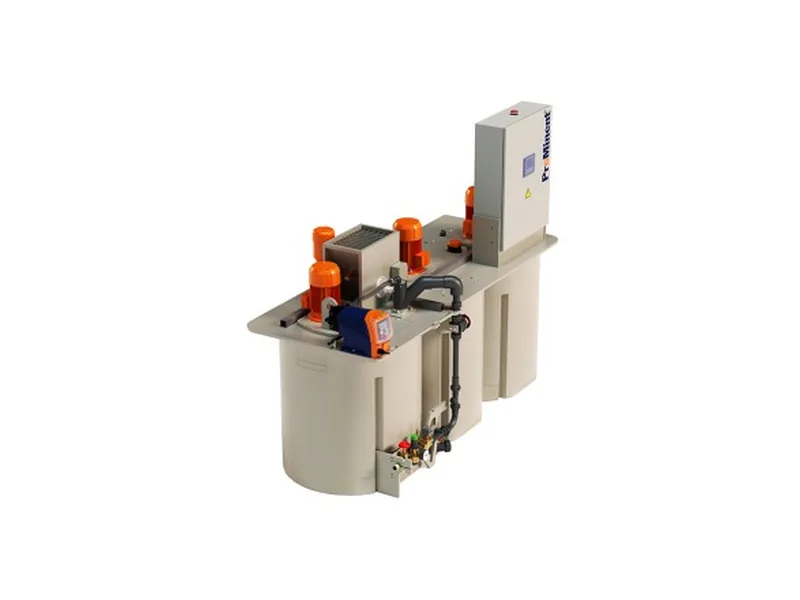
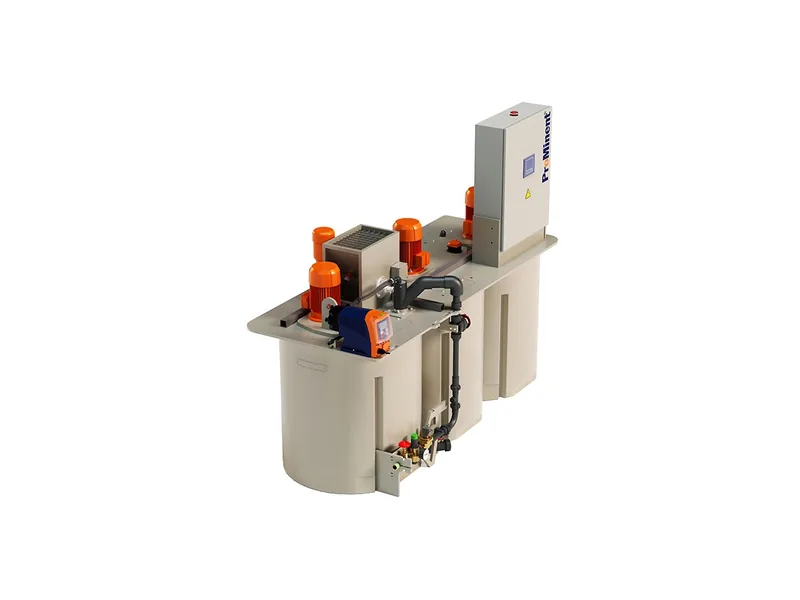
Figure 1: ProMinent Ultromat unit for dissolving, ageing and storing polymer. Image source: ProMinent official website
- Aluminum salts: polyaluminum chloride (PAC) and aluminum sulfate.
- Iron salts: ferric chloride and polyferric sulfate.
Dosed ahead of flocculation, these coagulants form floc that settles in clarifiers and is polished out in filters. For most river and reservoir sources, a coagulant alone gets the finished water within spec at normal turbidity. If you want to see how coagulant dose tracks raw water changes, read our article on adjusting PAC dose when river turbidity changes.
PAM is a high molecular weight flocculant. It bridges small floc into larger, faster-settling particles. That is useful, but it is a finishing step rather than the core of coagulation, so for many plants it is optional.
Why water treatment plants avoid PAM: the monomer question
Polyacrylamide is made by polymerizing acrylamide, and every product contains some unreacted monomer. Acrylamide is toxic, drinking water standards set limits for it, and chemicals used in contact with drinking water usually need specific health approvals.
That creates real obligations:
- Only a narrow range of PAM grades with low monomer content are acceptable for potable use.
- The dose has to stay low and be recorded.
- The plant must be able to show that the monomer limit is met, which adds monitoring and paperwork.
For many utilities, not dosing PAM is simply easier and lower risk. That is the most direct answer to why water treatment plants avoid PAM.
Why water treatment plants avoid PAM: filters do not like polymer
There is a process reason too. Polymer is sticky. A slight overdose means unbound polymer carries over to the filters and coats the media. Over time the media clumps, mudballs form, backwash struggles to clean the bed, filter runs shorten and turbidity breakthrough becomes more likely.
Plenty of plants have trialed PAM in the coagulation stage, liked the big floc, and then stopped a few weeks later when filter operators started complaining. That experience is a large part of why water treatment plants avoid PAM in routine operation.
When plants do add a little PAM
Understanding why water treatment plants avoid PAM does not mean polymer is banned outright. Some plants dose small amounts in the main process when:
- Flood season pushes raw water turbidity up quickly and coagulant alone cannot keep up.
- Cold, low-turbidity water produces fine floc that settles slowly.
- Pre-sedimentation basins handle water with a very high sediment load.
In these cases PAM acts as a coagulant aid. It is typically added after the coagulant, at a low dose. Our guide to PAC and PAM dosing sequence explains the order and spacing.
Where PAM really belongs in a water plant
Clarifier sludge and filter backwash water still have to be treated, and thickening and dewatering are where polymer earns its place. That sludge does not go into the finished water. It is conditioned with PAM, dewatered and hauled away.
This side of the plant often uses a packaged polymer preparation unit. The ProMinent Ultromat polymer preparation systems, for example, combine dissolving, ageing and storage of powder or liquid polymer in one unit, with metering pumps feeding the thickener or dewatering machine. Keeping it separate from the main process lets the plant use PAM without touching finished water quality. This split is the practical reason why water treatment plants avoid PAM in the main stream yet still keep polymer in stock. More ProMinent equipment is listed on our ProMinent page.
If you do dose polymer in the main process
Knowing why water treatment plants avoid PAM also tells you how to use it safely when you must:
- Use an approved grade with low monomer content and keep batch documents.
- Set the dose from jar tests and adjust upward from a low start.
- Watch filter run times and backwash performance, and cut the dose at the first sign of clumping.
- Treat polymer solution as a viscous fluid when choosing make-up and metering equipment.
Safety note: spilled polymer solution is extremely slippery. Wash down the make-up area promptly.
Conclusion
So why water treatment plants avoid PAM is not a mystery. Metal salt coagulants already do the core job, acrylamide residue makes compliance harder, and overdose damages filters. Some plants use a little as a coagulant aid in high-turbidity or cold-water periods, but PAM mostly belongs in sludge treatment. For the disinfection stage of the same plant, see sodium hypochlorite dosing for drinking water. If you need a coagulant, coagulant aid or sludge polymer chemical dosing skid, send us the plant flow, raw water turbidity and process stage and contact our engineers.
FAQ
Can PAM be detected in tap water?
Testing usually targets acrylamide monomer rather than the polymer itself, because the monomer is the controlled parameter. That extra monitoring is part of why water treatment plants avoid PAM unless they really need it.
Can a drinking water plant use cationic PAM?
It is generally not recommended in the main process. Anionic or nonionic approved grades are more common for potable use.
Without PAM, how do plants cope with flood-season turbidity?
They typically raise the coagulant dose, improve pre-sedimentation and sludge removal, and add an approved coagulant aid only if needed.
Does this explain why water treatment plants avoid PAM but still buy it?
Yes. Most of the polymer a waterworks buys goes to sludge thickening and dewatering, not to the water that reaches customers.
Can PAC fully replace PAM?
In the main drinking water process, usually yes. Sludge dewatering typically still needs polymer conditioning.