
Chlorine Dioxide Dosing System: Precursor Feed, Control, Safety
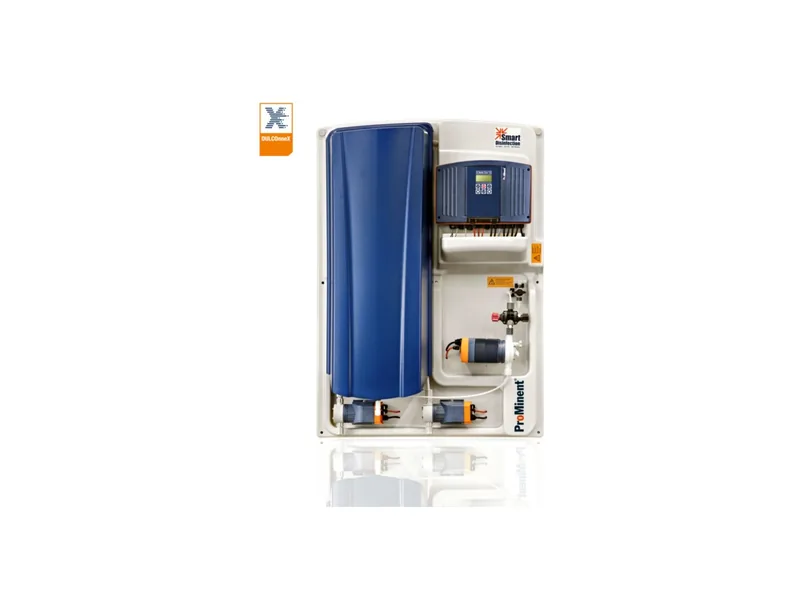
A chlorine dioxide dosing system works differently from a hypochlorite feed. Chlorine dioxide is unstable and cannot be bought and stored as a finished product, so it is generated on site and dosed straight away. The front half of the system meters two precursors; only the back half doses the finished solution.
It is used for drinking water, hospital wastewater, cooling towers and food washing. Below we cover process choice, precursor metering, control and safety.
Two processes for generating ClO₂
The common route is the acid and chlorite process: sodium chlorite reacts with hydrochloric acid in a reactor to produce chlorine dioxide solution. There are two versions:
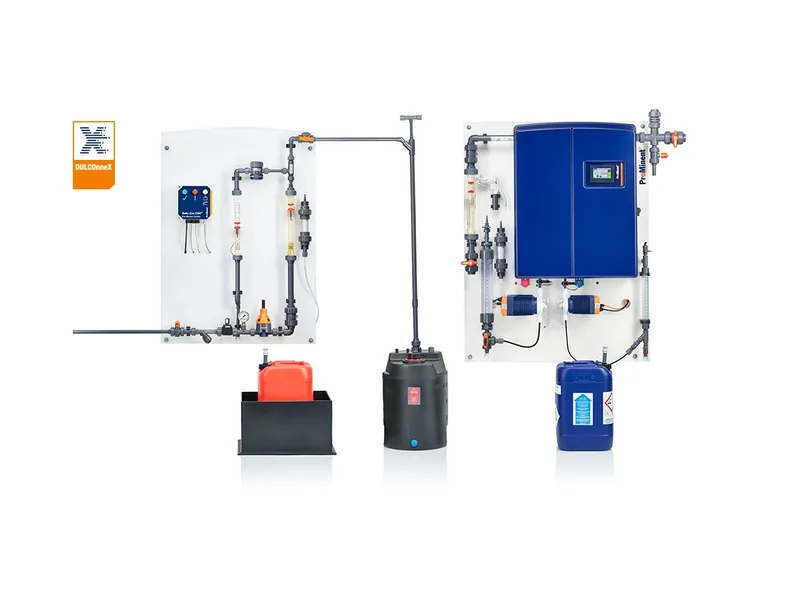
Figure 1: ProMinent Bello Zon CDKd chlorine dioxide system. Image source: ProMinent official website
- Dilute chemicals: roughly 7.5% sodium chlorite and 9% hydrochloric acid. Safer to handle and suited to small and medium flows.
- Concentrated chemicals: about 24.5% sodium chlorite and 25 to 37% hydrochloric acid. Less chemical volume to store, suited to large flows, with stricter safety demands.
As an example, ProMinent lists the Bello Zon CDLb on dilute chemicals at 0 to 120 g/h, with storage of up to 60 g of chlorine dioxide for peak demand, and the CDKd on concentrated chemicals at 7.5 to 12,000 g/h with a food-safe PVDF reactor.
Precursor metering is the core of the chlorine dioxide dosing system
Inside the generator there are usually two metering pumps, one for chlorite and one for acid. If the ratio drifts, yield falls and chlorite residue rises, or acid consumption climbs.
When specifying these pumps:
- Size flow from maximum generator output and precursor strength, with margin.
- Choose liquid end materials for each chemical; acid-resistant plastics for HCl and compatible materials for chlorite.
- Fit flow monitoring on both pumps and interlock the generator to stop if either line loses flow.
- Add level monitoring on both drums so a low tank alarms before a pump runs dry.
Some generators adjust acid automatically, and ProMinent states this can cut hydrochloric acid use by up to 25%, which is worth having on large plants.
Sizing the chlorine dioxide dosing system
Start with peak treated flow and the highest dose you expect, then multiply to get grams of ClO₂ per hour. A chlorine dioxide dosing system for a plant that swings between night and day flow needs a generator whose turndown covers both, not just the peak. Systems with internal storage can cover short peaks without oversizing the reactor.
Check the precursor consumption that results, because it sets drum size, delivery frequency and store area. For a chlorine dioxide dosing system on concentrated chemicals, also check separation distances on site before fixing the layout. If several buildings or loops need treatment, decide early whether one central chlorine dioxide dosing system with multiple injection points is better than several small units.
Controlling dose and residual
Dose depends on water quality and contact time and is usually set by working back from the target residual. Drinking water projects watch two figures: chlorine dioxide residual at the plant outlet and in the network, and the chlorite by-product, against the limits of the local regulation.
A chlorine dioxide dosing system is typically controlled in one of three ways:
- Flow-paced: a water meter or flow meter pulse sets output, so dose follows flow.
- Residual closed-loop: an online chlorine dioxide sensor trims output.
- Compound: flow as feed-forward with residual correction, best for variable systems.
Sensor siting and upkeep follow the same principles as in our residual chlorine monitoring guide.
Injection point and mixing
Place the injection where there is enough contact time, such as the clear well inlet or a main header, ideally followed by a static mixer. With several injection points, meter each one separately rather than splitting by valve opening.
Equipment list
A complete chlorine dioxide dosing system usually includes two precursor tanks with offloading points, precursor metering pumps, the reactor, a dilution and dosing unit, online residual and chlorite analysers, gas detection, ventilation and a control panel.
When requesting quotes, state treated flow, target residual, precursor type, number of injection points and communication needs. On retrofits, confirm delivery access and chemical store space early, as concentrated processes add separation and bunding requirements.
Safety layout
Most incidents with a chlorine dioxide dosing system start with the precursors. If concentrated acid and concentrated chlorite mix outside the reactor, chlorine dioxide gas is released quickly.
Basic requirements:
- Store acid and chlorite separately with their own bunds, colour-code lines and use mistake-proof offloading couplings.
- Install chlorine dioxide gas detection in the generator room, linked to ventilation and alarms.
- Spilled chlorite can dry into a residue that supports combustion; wash it away with water and do not absorb it with sawdust or other combustibles.
- Provide ventilation, eyewash, PPE and posted operating procedures.
Common problems
Low output. Check precursor strength, then both pump flows, then the reactor for scaling or blockage.
High chlorite. Usually a ratio error or incomplete reaction. Adjust acid feed and check reactor temperature.
Gas binding. In any chlorine dioxide dosing system, acid and ClO₂ solution both release gas. Keep pump bleed valves working and suction lines short.
For complete applications, see our pages on hospital wastewater disinfection and secondary supply disinfection.
Conclusion
A reliable chlorine dioxide dosing system is built from the front end: choose the dilute or concentrated process, fit two precursor metering pumps with loss-of-flow interlocks, control output by flow and residual, then put proper storage separation, gas detection and ventilation in place. Drinking water plants should track residual and chlorite together.
To size a generator and its pumps for your flow, contact our engineers.
FAQ
Can chlorine dioxide be bought ready-made like hypochlorite?
Generally no. It is unstable, so it is generated on site and used immediately.
Dilute or concentrated process?
Dilute suits small to medium flows and sites with basic chemical handling. Concentrated suits large flows where chemical volume matters and procedures are strict.
How is ClO₂ dose determined?
From water quality and contact time, working back from target residual at the outlet and network, then trimmed by online measurement.
Why is chlorite high?
Usually precursor ratio error, incomplete reaction or overdosing. Correct the ratio and dose rate.
What alarms does a generator room need?
At minimum, chlorine dioxide gas detection linked to ventilation. Leak detection in the precursor area is also recommended.