
Aquaculture Dosing Pump Guide: Disinfection, pH and RAS
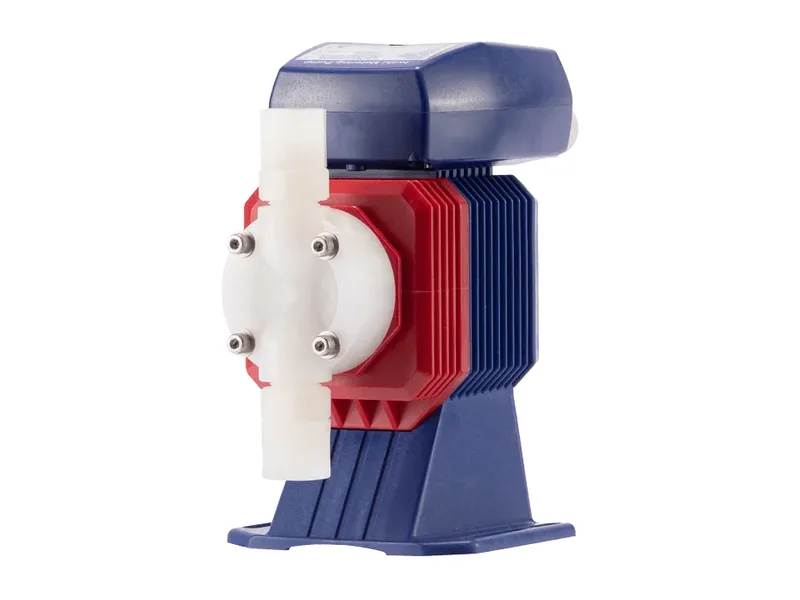
An aquaculture dosing pump works in water that holds live stock. Overdose and you lose fish; underdose and disease or water quality drift gets ahead of you. That makes the job different from wastewater dosing: small flows, continuous feed, and a pump that follows a flow or pH signal. In marine farms the pump also has to survive salt. This guide is for technicians running recirculating aquaculture systems (RAS), hatcheries and indoor farms, and for contractors who supply their water treatment. It is about culture water, not farm effluent.
What chemicals does an aquaculture dosing pump handle?
Most indoor farms meter three groups of chemicals:
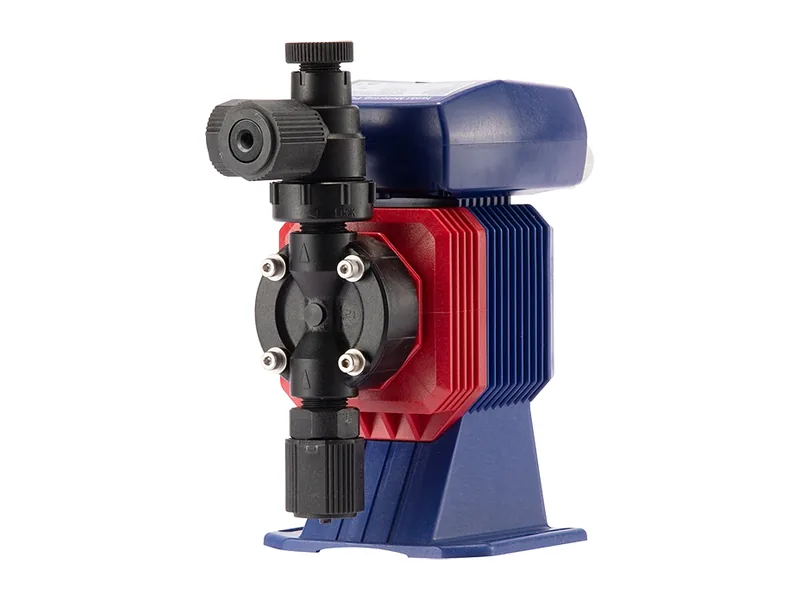
Figure 1: IWAKI EHN series solenoid metering pump with air vent. Image source: IWAKI official website
- Disinfectants for intake water, empty tanks, pipework and tools: sodium hypochlorite, chlorine dioxide or peroxide-based products.
- Water conditioning for pH and alkalinity: sodium bicarbonate, dilute sodium hydroxide, sometimes lime water.
- Others such as sodium thiosulfate for dechlorination, plus nutrients or trace elements in hatcheries.
The product and dose should follow your fisheries authority's rules and the product label, including withdrawal periods. The aquaculture dosing pump only delivers what you set. It does not decide the treatment.
Fish farm water disinfection with an aquaculture dosing pump
Intake disinfection and chlorine residual
Hatcheries and marine indoor farms often disinfect intake water by injecting hypochlorite into the supply line, then letting it react in a contact tank or aeration stage before dechlorinating. The real danger is chlorine residual reaching the culture tanks. Fish and shrimp are very sensitive to it.
A safe setup looks like this:
- Interlock the disinfection pump with the intake pump, so chemical never builds up in a stagnant line.
- Fit an online chlorine analyzer after the contact tank. On high residual, alarm and stop the intake.
- Put dechlorination chemical on its own aquaculture dosing pump, paced by residual or flow.
Stored hypochlorite breaks down and releases gas, which vapor-locks small solenoid pump heads. A head with automatic degassing saves a lot of trouble; our comparison of Iwaki EHN auto-degassing and high-pressure versions explains the options.
Tank and pipe disinfection
Empty-tank disinfection is usually a batch high dose, and a metering pump is not essential. But where RAS pipework or areas around the biofilter need controlled circulation disinfection, a pump on a timer gives better control. Flush thoroughly and confirm no residual before restocking.
RAS chemical dosing: why alkalinity needs continuous feed
RAS is where an aquaculture dosing pump earns its keep. Nitrifying bacteria in the biofilter convert ammonia to nitrate and consume alkalinity as they do it, so pH slowly slides. When alkalinity runs short, nitrification slows and ammonia climbs.
So alkalinity control is not a bag of bicarbonate every few days. It is small, continuous dosing:
- Mount the pH probe on the return line or biofilter outlet and let the pump adjust its stroke rate on pH deviation.
- Big slugs cause local pH spikes and stress fish, so inject where mixing is good, such as the sump or return channel, not straight into a culture tank.
- Keep bicarbonate solutions moderately dilute. In cold weather they crystallize and jam check valves. A tank mixer helps.
Where the aquaculture dosing pump should sit
Mount the aquaculture dosing pump close to the chemical tank with flooded suction, and run a short injection line to the sump. Long suction lines in a warm, humid fish house collect air and the pump loses prime overnight. Fit a back pressure valve if the injection point is at atmospheric pressure, otherwise a small solenoid pump can siphon and overdose. Calibrate with a graduated column after any head or tubing change, because a farm cannot afford to discover drift through stock losses.
Probe placement, lag and overshoot are covered in our article on pH dosing system control.
Seawater dosing pump materials
Seawater is full of chloride and hard on metals. Many farms assume stainless steel lasts longest, then find 316 heads and balls pitting under seawater plus hypochlorite. For a marine aquaculture dosing pump:
- Choose PVC or PVDF liquid ends. PVC suits ambient temperatures; pick PVDF when water or chemical runs warmer.
- Use ceramic balls, and check seat and seal compatibility with both hypochlorite and caustic.
- Run UPVC or PE tubing, and use 316 or plastic for bolts and brackets, with salt-spray protection.
- Do not mount pumps and panels directly above tanks. Humidity and salt mist kill electronics.
Before removing a pump head, close valves, relieve pressure, and wear gloves and goggles. Hypochlorite in the eye is a serious injury.
Aquaculture dosing pump selection example
For low-flow, signal-paced duties we often recommend the Iwaki EHN series solenoid metering pump. Iwaki lists main materials of PVC, GFRPP, PVDF and SUS316, with a PVC type rated 0–40°C and the others 0–60°C. The controller offers EXT pulse operation (multiply and divide) and a STOP input, some models accept an analog signal, and a level sensor can warn of a low tank. Marine farms usually pick PVC or PVDF heads. See our Iwaki brand page and solenoid metering pumps for more.
Do not size right at the theoretical number. Stocking density, water temperature and alkalinity demand all change through the season, so keep the aquaculture dosing pump running in the middle of its range.
Conclusion
Three rules cover most of it. Interlock the disinfection pump with intake flow and watch residual chlorine so it never reaches stock. In RAS, let pH drive a small, continuous alkalinity feed injected where it mixes well. In seawater, choose PVC or PVDF heads and minimize metal. Send us your flow, chemicals, fresh or salt water and control method, and contact our engineers to size the right aquaculture dosing pump.
FAQ
Can I dose hypochlorite straight into a fish tank?
No. Use it for intake or empty-tank disinfection, dechlorinate, and confirm zero residual before water reaches stock.
How much alkalinity should a RAS get per day?
There is no fixed figure. It depends on feed rate, nitrification load and makeup water, so control it from pH and alkalinity readings.
Is a stainless steel head fine for seawater?
Usually not. Chloride plus disinfectant pits 316. PVC or PVDF heads are the safer choice.
Why does my bicarbonate solution keep blocking the pump?
The solution is probably too strong or crystallizing in the cold. Dilute it, add mixing and flush the head with clean water regularly.
Can one pump handle both disinfection and pH control?
No. The chemicals and control signals differ. Use separate pumps and separate lines.