
Duty Standby Dosing Pumps: Changeover Procedure Without Gaps
Switching duty standby dosing pumps sounds trivial: stop one, start the other. The real goal is harder, because dosing should not stop during the changeover, and the two pumps should not run together long enough to double the dose.
On a one-duty, one-standby skid this is one of the most frequent operator tasks, and a surprising share of residual or pH excursions trace back to those few minutes. Below is a manual pump changeover procedure, followed by notes on automatic switchover.
Know the Piping Before You Switch
Check how the duty standby dosing pumps are connected before touching a valve. There are two common layouts:
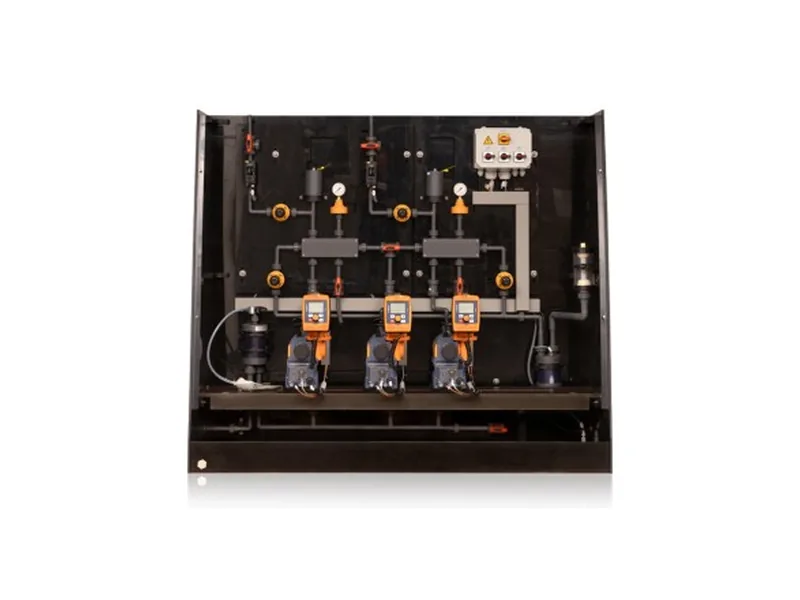
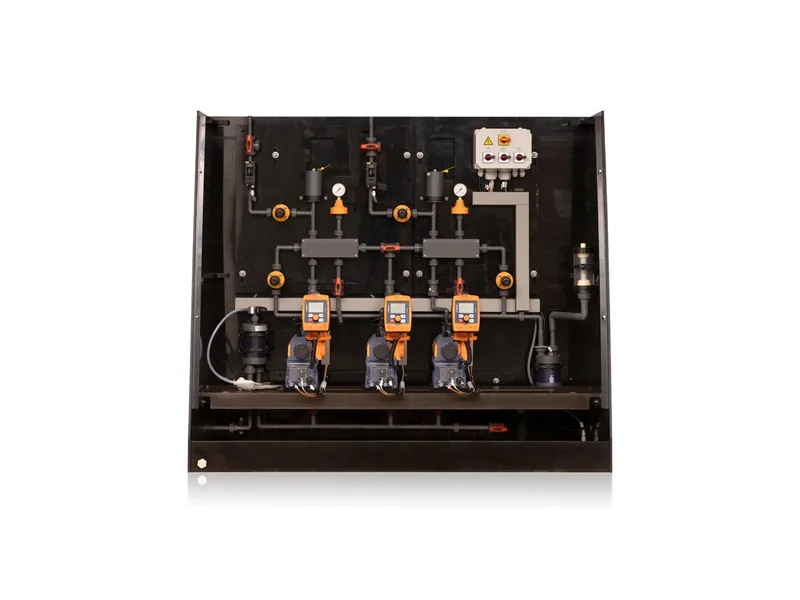
Figure 1: ProMinent DULCODOS panel DSWc with duty and standby pumps. Image source: ProMinent official website
- Both pumps discharge into a shared header with one injection point.
- Each pump has its own injection point, so switching pumps also moves the dosing location.
The ProMinent DULCODOS panel DSWc is a good example. It holds up to three low-pressure metering pumps, one of which is on standby, and ProMinent lists frame sizes both for one pump or two pumps with one injection point (standby) and for two pumps with two injection points or three pumps. With a shared injection point, each pump needs its own check and isolation valves on the discharge, or the running pump pushes back into the idle one. For layout choices, see our article on dosing skid pump configuration.
Manual Pump Changeover Procedure
The example assumes a pair of duty standby dosing pumps, with pump A on duty and pump B on standby.
Step 1: Inspect the standby pump
Confirm that B's suction and discharge valves are closed, that the liquid end and check valves are free of crystals, and that gearbox oil is at the correct level. A standby that has sat untouched for months is where most changeover problems start.
Step 2: Match the stroke setting
Set B's stroke length to the same value as A. On solenoid pumps, also match stroke rate. Duty standby dosing pumps of the same model with identical settings give a near-identical flow after the switch. If the pumps are on drives, make sure B's drive is in remote mode.
Step 3: Open suction and prime
Open B's suction valve and keep discharge closed. Use the bleed valve to return liquid to the tank until it runs free of bubbles. Our guide to diaphragm metering pump air purging covers the details.
Step 4: Open discharge and start pump B
Open B's discharge valve and start the pump. Watch the discharge gauge; pressure should settle near A's running value, typically within about a minute. If you have a calibration column or flow meter, take a quick reading.
Step 5: Stop pump A and isolate it
Once B is clearly dosing, stop A and close its discharge and suction valves. When duty standby dosing pumps share a header, keep the overlap short, usually one to two minutes, so the dose at the injection point barely moves.
Step 6: Depressurize and flush pump A
If A is going for maintenance, relieve pressure in the liquid end and discharge spool, then flush with water. The DSWc panel offers 3-way ball valves for system flushing and a backwashing relief option on the pressure side, which are exactly the features this step needs.
Step 7: Log the change
Good records make duty standby dosing pumps easier to manage across shifts. Record the time, the duty pump number, the stroke setting and the discharge pressure. The next shift then knows which pump is on duty and why the other one is off.
Common Mistakes With Duty Standby Dosing Pumps
Stopping first and starting second is the classic error. If the operator stops A and then spends fifteen minutes priming B, the injection point goes without chemical, which is long enough for residual chlorine or pH to drift out of range.
Leaving A's discharge valve open on a shared header is the second mistake. B's pressure then reaches A's liquid end, and any leakage past A's discharge check valve lets chemical shuttle between the pumps.
The third is skipping the pressure check after the switch. Low pressure on B usually means a partly closed suction valve or trapped gas, and by then A is already off.
Automatic Switchover and Rotation of Duty Standby Dosing Pumps
With a PLC, duty standby dosing pumps can switch over automatically:
- On a duty pump fault, low discharge pressure or flow switch alarm, start the standby.
- Once the standby is confirmed running, stop the faulty pump and raise an alarm.
- Rotate duty and standby on a schedule, often about once a week.
Rotation matters for duty standby dosing pumps. Sodium hypochlorite and lime slurry tend to crystallize in an idle liquid end, and a standby that cannot pump is no standby at all. For sizing redundancy on larger plants, see wastewater dosing pump redundancy.
Base the switchover on discharge pressure or flow, not just the motor running signal. A pump that turns but does not deliver will not trip a run feedback.
Conclusion
The rule for duty standby dosing pumps is start before stop: inspect the standby, match the stroke, prime it, confirm delivery, then stop the duty pump with minimal overlap. Shared headers need closed isolation valves and working check valves, and the gauge check after switching catches most problems. Automatic switchover plus regular rotation keeps the standby ready. If you are planning a dosing skid with redundant pumps, talk to us through our contact page.
FAQ
Can duty standby dosing pumps run together during changeover?
Briefly, yes. Dosing roughly doubles while both run, so keep the overlap to about one to two minutes.
Why prime the standby before opening its discharge?
Gas in the liquid end stops the pump from delivering. Priming first means flow picks up as soon as the pump starts.
How often should duty and standby rotate?
About once a week is common, more often for chemicals that crystallize. Check pressure and flow after each rotation.
Flow differs after the switch. What should I check?
Compare the stroke settings first. If they match and flow still differs, calibrate each pump separately and correct the settings.
Which signal should trigger automatic switchover?
Discharge pressure or a flow switch works best. A motor running signal cannot detect a pump that turns without delivering.