
Metering Pump vs Transfer Pump: Which One Your Process Needs
The metering pump vs transfer pump question comes down to one word: control. A transfer pump moves liquid from A to B as fast as the system allows, while a metering pump delivers a set volume per hour and keeps delivering it when line pressure changes.
Buyers often send us a request for a "flow pump" or a "chemical pump" with only a flow and head value. Before quoting, we ask what the pump actually has to do, because the answer settles the metering pump vs transfer pump choice far more than the name on the request.
Metering Pump vs Transfer Pump: What a Transfer Pump Is Built For
A transfer pump is usually a centrifugal, magnetic drive or gear pump. Its job is volume: emptying a tote, filling a day tank, circulating cooling water. Flow follows the pump curve, so when discharge pressure rises, flow drops. A dirty strainer, a longer pipe run or a partly closed valve all change the output, and nobody can say in advance by exactly how much.
For bulk liquid handling that is fine. Being off by ten or fifteen percent does not matter when you are filling a tank.
Metering Pump vs Transfer Pump: The Core Differences
Here is where the two designs part ways:
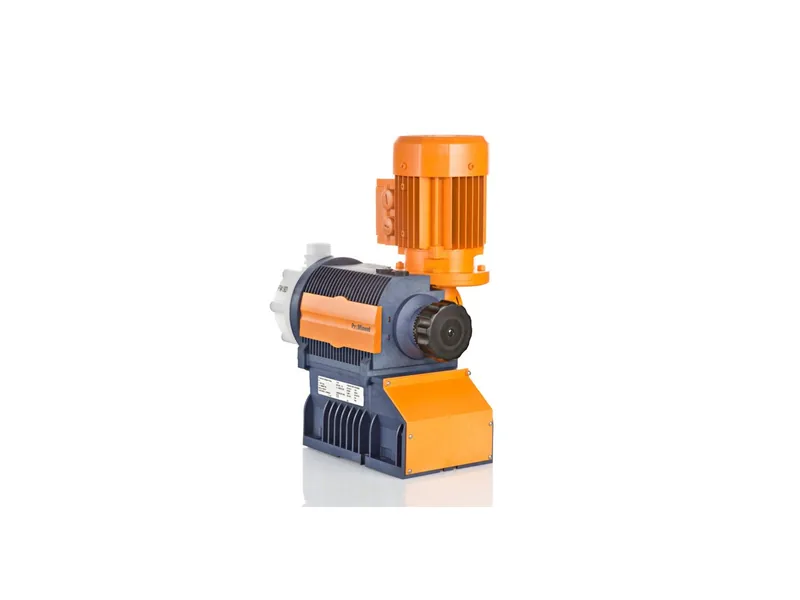
Figure 1: ProMinent Sigma/1 motor-driven diaphragm metering pump. Image source: ProMinent official website
- How flow is produced. A metering pump is a reciprocating positive displacement pump. Each stroke pushes out a fixed volume, so flow is roughly displacement per stroke times stroke rate. A transfer pump relies on an impeller or gears and a system curve.
- How flow is adjusted. Metering pumps change stroke length and stroke frequency, and most accept a 4-20 mA or pulse signal. Transfer pumps are throttled with a valve or slowed with a VFD.
- Effect of back pressure. Within its rated pressure, a metering pump's output changes very little. A centrifugal pump loses flow quickly as head rises.
- Flow range. Metering pumps typically cover a few L/h up to a few thousand L/h. Transfer pumps usually start at several m3/h.
Accuracy is the clearest gap in the metering pump vs transfer pump comparison. Serious metering pump makers publish it; Doseuro, for example, rates its plunger series at plus or minus 1% within 10 to 100% of rated capacity. Transfer pump data sheets generally do not list a dosing accuracy at all.
Dosing Pump, Metering Pump, Proportioning Pump
These names describe the same family. "Dosing pump" is common in water treatment, "metering pump" in process plants, and "chemical injection pump" in oil and gas. If you want the longer explanation, see our article on dosing pump vs metering pump naming.
A practical metering pump vs transfer pump test: look at the quotation. If it lists stroke length, stroke rate, check valves and liquid end material, it is a metering pump. If it lists impeller diameter, head and mechanical seal, it is a transfer pump.
Metering Pump vs Transfer Pump: When You Must Use a Metering Pump
Work through three checks. Is the dose measured in L/h or mL/min? Is the chemical corrosive, toxic or expensive? Will discharge pressure vary? If any answer is yes, the metering pump vs transfer pump decision is already made for you.
Typical metering duties include:
- Sodium hypochlorite, coagulant, antiscalant and pH adjustment in water treatment
- Phosphate and amine injection into pressurized boiler feed lines
- Adding reagents to a reactor in a fixed ratio
- Any system where a flow meter or analyzer sends a signal to adjust the dose
Moving bulk chemical into storage, topping up a mixing tank with water, or recirculating a tank are transfer jobs. Spending money on a metering pump there makes little sense. For a deeper look at the centrifugal side, read metering pump vs centrifugal pump.
Common Metering Pump vs Transfer Pump Mistakes on Site
The first mistake is turning a small centrifugal pump into a "dosing pump" with a VFD. At low speed the pump no longer produces enough head to inject into a pressurized line, and efficiency collapses. The dose drifts every time the main line pressure moves.
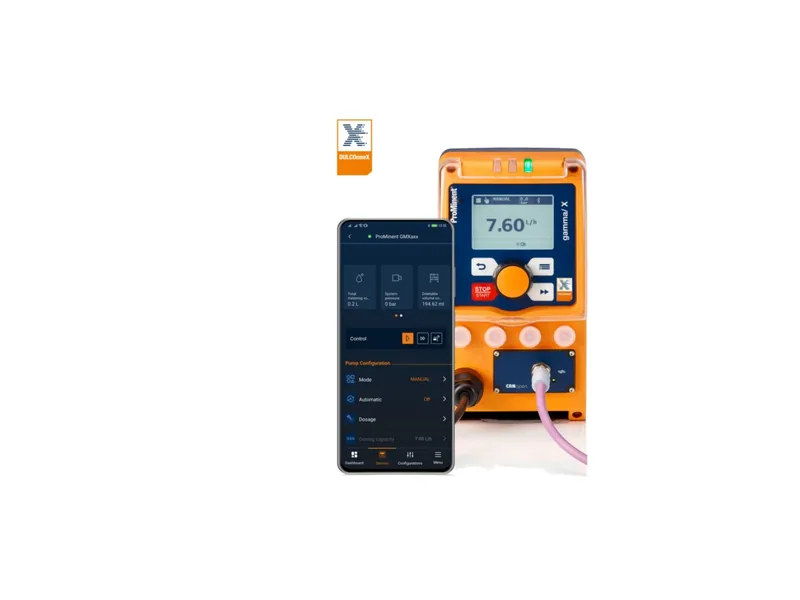
The second mistake runs the other way. A metering pump discharging into a line near atmospheric pressure, without a back pressure valve, can siphon. Actual flow then exceeds the setting. That is why ProMinent offers back pressure valves as standard accessories for pumps such as the gamma/X solenoid pump and the Sigma/1 motor-driven diaphragm pump.
The third mistake is sizing a metering pump only on maximum flow. If the pump spends its life at a very short stroke, accuracy suffers. A common rule is to keep normal flow at about 30 to 90% of rated capacity. To narrow down pump styles, start with the four types of metering pumps, then browse our metering pump range by flow and pressure.
How the Metering Pump vs Transfer Pump Choice Affects Cost
A transfer pump is usually cheaper to buy for the same nominal flow, but cost per liter dosed tells a different story. Overdosing hypochlorite or antiscalant for a year can cost more than the pump. Underdosing can mean scaling, corrosion or failed discharge limits. In most chemical feed duties, the metering pump vs transfer pump price difference is paid back by chemical savings and fewer process upsets.
Conclusion
The metering pump vs transfer pump choice is about whether you need a controlled dose. If the goal is simply to move liquid, use a transfer pump. If you need a set amount per hour, signal control or injection into a pressurized line, use a metering pump. Send us the chemical, concentration, hourly dose and discharge pressure and contact our engineers to confirm the right pump type.
FAQ
Can I convert a transfer pump into a dosing pump?
Not reliably. A valve or VFD changes flow, but the output still shifts with back pressure, so dosing accuracy stays poor.
Can a metering pump be used to transfer chemicals?
For small volumes, yes, but it is an expensive way to move liquid. Bulk transfer is better handled by a centrifugal or magnetic drive pump.
Is a dosing pump the same as a metering pump?
Yes. The names vary by industry and region, but the design and the key specifications are the same.
Would a peristaltic pump work for small doses?
It can at low pressure and short tubing runs. For higher discharge pressure or continuous duty, a diaphragm metering pump is generally more stable.
My metering pump doses inaccurately. Is the pump faulty?
Usually not. Suction leaks, a missing back pressure valve or crystallized check valves cause most errors, so check the piping first.