
Dosing Pump Low Output: Troubleshoot from Suction to Discharge
Dosing pump low output almost always traces back to one of four zones: the suction side cannot fill the head, the pump itself leaks flow internally, the discharge side has the wrong pressure, or the control settings are off. The fastest way to find it on site is to follow the chemical in the direction it flows, checking the things that need no disassembly first and opening the pump head last.
This is a troubleshooting sequence for mechanical and solenoid diaphragm metering pumps, written for operators and maintenance technicians. Before you start, confirm you really have dosing pump low output. Measure real flow with a calibration column or graduated cylinder and compare it with the setpoint so you know how far off you are. Our metering pump calibration method explains how.
Narrow down the zone first
A quick test helps. Temporarily disconnect the line after the discharge valve and let the pump discharge into a graduated cylinder at atmospheric pressure. If flow recovers, the problem is probably on the discharge side. If it is still low, look at suction or the pump itself. Bubbles in the suction tube, or liquid surging back and forth in it, point straight at the suction side.
Zone 1: suction side causes of dosing pump low output
Suction is the most common source of dosing pump low output, and you can check it without opening anything.
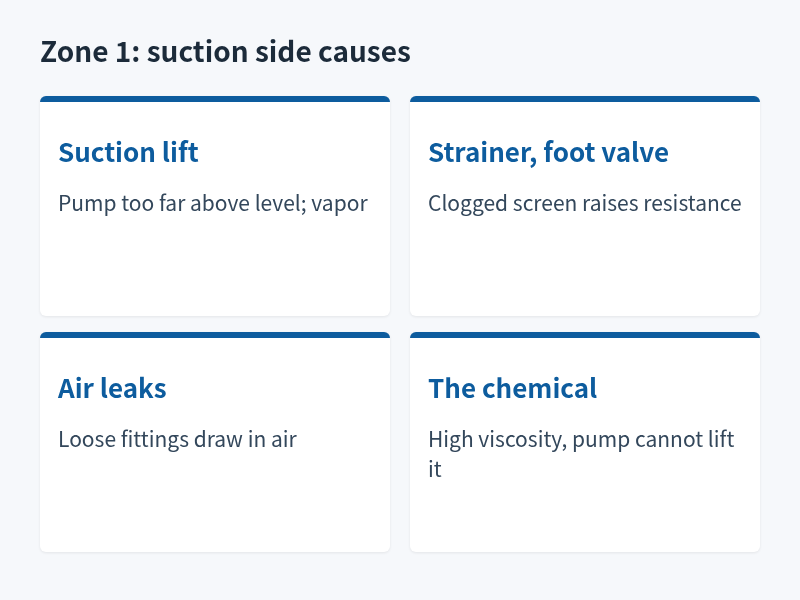
Figure 1: Work through four zones in order: suction, pump, discharge, then control settings.
- Suction lift. If the pump sits too far above the liquid level, pressure in the head during the suction stroke drops below the vapor pressure of the chemical and cavitation starts. The NEWDOSE mechanical pump manual limits suction lift to 2 m. Sodium hypochlorite and hydrogen peroxide gas off easily, so flooded suction is safer; see metering pump suction lift.
- Strainer and foot valve. A screen clogged with floc or crystals raises suction resistance and output slowly falls. Flush it and check for tears.
- Air leaks. A loose fitting or flange gasket means the pump draws half chemical, half air. Look for a steady stream of bubbles.
- The chemical itself. High-viscosity liquids such as concentrated polymer may simply be beyond the pump you have, and a pump built for viscous duty is the fix.
Zone 2: dosing pump low output inside the pump
If suction checks out, move to the pump. Stop it, close both isolation valves and release pressure first.
Check valves
Crystals or debris in the suction or discharge check valve, or a worn ball and seat that no longer closes, let chemical slip back and forth inside the head. Clean them, and replace if that does not help. When refitting, follow the orientation in the manual exactly; a reversed valve gives no flow or even pumps backward. Do not wrap PTFE tape on the valve threads.
Diaphragm
A deformed or fatigued diaphragm displaces less per stroke. For mechanical pumps the diaphragm is typically inspected or replaced every 5000 hours or once a year, so if that interval has passed, suspect it first.
Drive
Low motor speed on a mechanical pump, often from low supply voltage or a motor fault, also causes dosing pump low output. On a solenoid pump, check that stroke frequency actually reaches the setting.
Zone 3: discharge side and dosing pump low output
Discharge problems are easy to miss because the symptom is often unstable flow rather than simply less flow.
- Back pressure too high. A partly closed valve, blocked line or scaled injection quill makes the pump work against high pressure and output drops. In severe cases the relief valve lifts and recirculates. Compare the discharge gauge with its normal reading.
- Back pressure too low, or siphoning. When discharge is near atmospheric or the injection point is below the tank, chemical can siphon through and accuracy suffers. The NEWDOSE manual recommends a back pressure valve when the differential is below 1 bar; see why a metering pump needs a back pressure valve.
- Leaks at discharge fittings also make pressure unstable. Tighten or reseal them.
Zone 4: control settings behind dosing pump low output
If the first three zones are fine, go back to the settings:
- Has someone turned the stroke length knob? At very short stroke, linearity suffers; see why stroke should stay above 30 percent.
- In external control, is the 4–20 mA or pulse signal arriving, and is full scale set correctly?
- After a diaphragm or valve change, was the pump recalibrated? Old calibration data will not match.
Good habits while troubleshooting
Record each zone as you go, change one thing at a time and measure flow after each change. Changing several things at once hides the real cause of dosing pump low output. Before opening any pump head, stop the pump, isolate power, close both valves and release pressure, and wear gloves and goggles. Acid and caustic heads hold more residue than you expect.
Conclusion
Work through dosing pump low output in four zones. Measure real flow, then check suction lift, strainers and air leaks. Next, open up the check valves and diaphragm, then look at discharge pressure and siphoning, and finally verify stroke, external signal and calibration. If all four zones check out and flow is still short, the pump may be undersized. Replacement pumps are in our metering pump range, and strainers and back pressure valves are under dosing accessories. Send pump model, chemical and duty and contact our engineers for a sizing check.
FAQ
What is the quickest first check for dosing pump low output?
Usually bubbles in the suction line, tank level and a blocked strainer. None of these needs tools, and they take minutes.
Why do I get dosing pump low output right after a new diaphragm?
Most often the pump was not recalibrated, or a check valve went back in wrong. Recalibrate first, then inspect the valves.
Is a slow decline different from a sudden drop?
Yes. Slow decline usually means a clogging strainer, valve deposits or diaphragm fatigue. A sudden drop usually means air ingress, a stuck valve or a changed setting.
Is a jumping discharge gauge related to low flow?
It can be. Large swings often come from leaking check valves or a missing pulsation dampener, which also cut real output.
What if every cause is ruled out and output is still low?
Check the sizing. Rated flow and pressure may have no margin left, and a larger pump is the answer.